April 4, 2026
Should You Seal Your Concrete Driveway? A Hamilton Homeowner's Guide
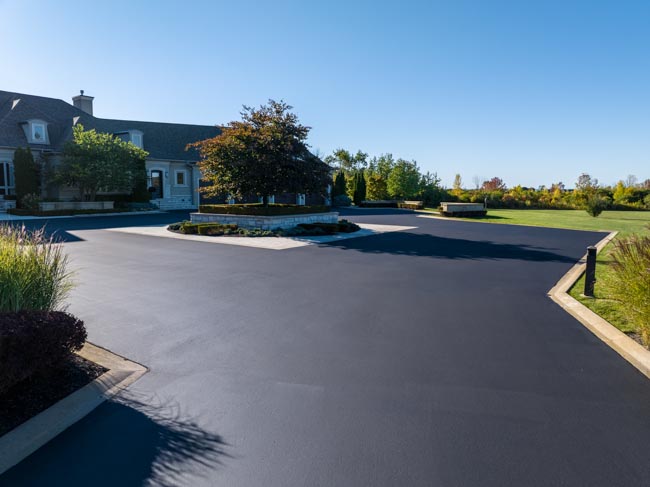
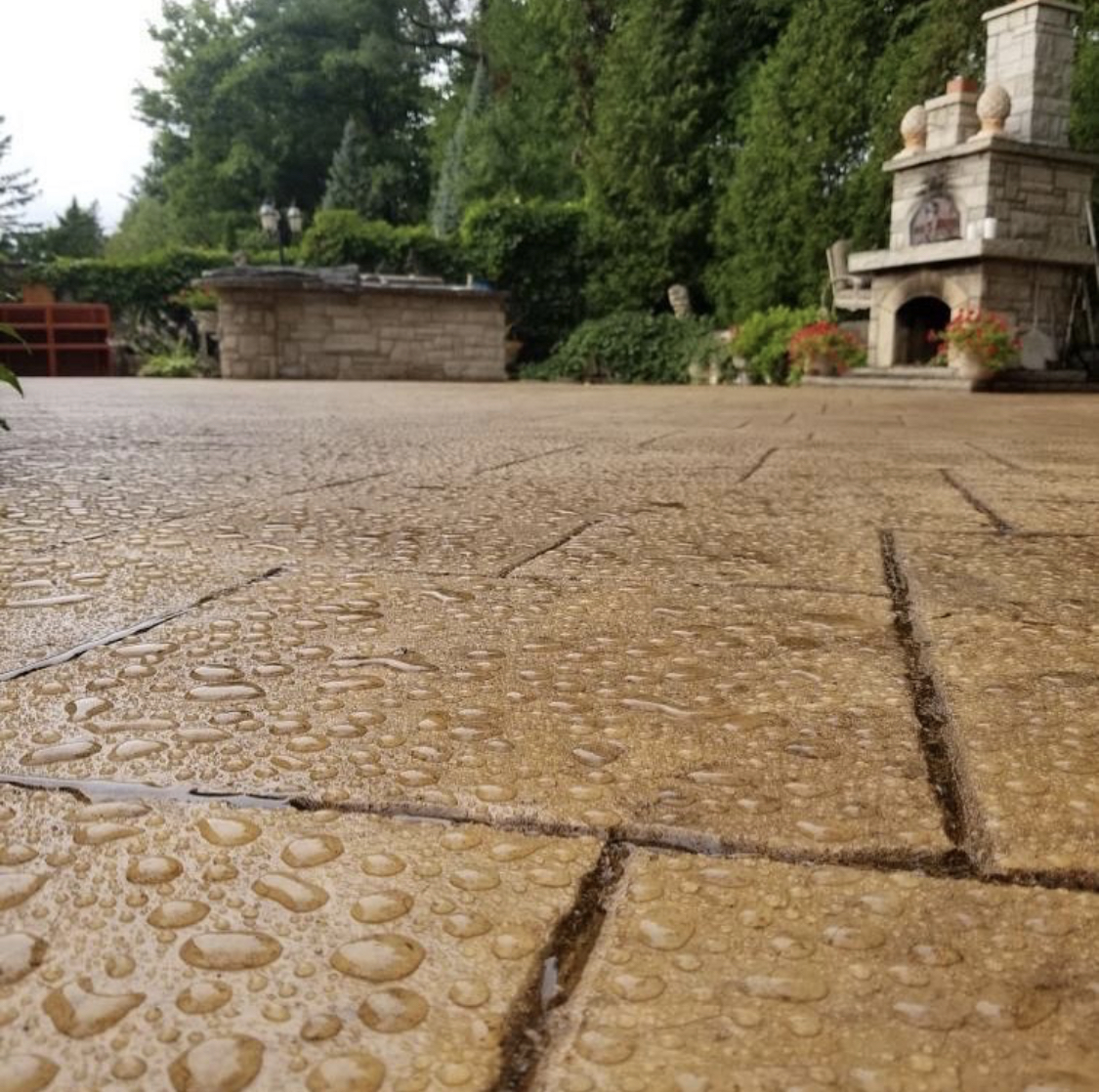
If you have ever noticed your concrete driveway looking darker after rain and thought it looked great that way, you have already seen what sealing can do. That darkened, rich appearance when wet is exactly what a properly sealed driveway looks like all the time.
The question most Hamilton homeowners eventually ask is whether sealing is actually worth it. After 15 years working on residential and commercial driveways and patios across Hamilton, Ancaster, Burlington, Waterdown, Dundas, Stoney Creek, Grimsby, and Beamsville, the answer we give is consistently the same: in this climate, on these surfaces, it is not just worth it — it is one of the most cost-effective things you can do to protect a significant investment.
What Happens to Unsealed Concrete in Hamilton
Concrete looks solid. It is not. At a microscopic level, concrete is porous — full of tiny channels that absorb water, salt, and contaminants freely. In a warm, dry climate that porosity is manageable. In Hamilton, it is a liability.
Every winter, road salt lands on your driveway twice. First from the street, tracked in by vehicles. Second directly from your own car — every time you drive home in winter, your undercarriage carries salt residue that drips onto the surface as the snow melts. That saltwater sits on the concrete and absorbs into it.
Once moisture is inside the slab, the freeze-thaw cycle takes over. Water expands when it freezes. In concrete, that expansion happens inside the material itself, slowly forcing the surface apart from within. Over enough cycles — and Hamilton experiences many of them in a single winter — the damage compounds.
The result is a surface that pits, erodes, flakes, and eventually cracks. Unsealed concrete does not fail dramatically or all at once. It deteriorates gradually, and by the time it looks obviously damaged, the process has usually been underway for years.
The Water Test: How We Show Homeowners What’s Happening
When we visit a property for an estimate, we will sometimes pour water directly onto the driveway and ask the homeowner to watch. The concrete darkens almost immediately as the water absorbs into the surface.
Two things happen in that moment. First, the driveway looks noticeably better — the colour is richer, the surface more vibrant. Second, the homeowner understands exactly what is being absorbed every time it rains or snows. Salt, moisture, contaminants — all of it going straight in.
The reaction is almost always the same: “You know what, it really does look great when it rains.” That is exactly what we tell them a sealed driveway looks like all the time.
Signs Your Driveway Needs Sealing
- Water soaks in instead of beading — run the water test yourself with a garden hose. If the concrete darkens and absorbs rather than letting water bead and run off, the sealer has worn away
- Faded or uneven colour — concrete that looked uniform and rich when installed has gone flat, pale, or patchy
- Surface pitting or rough texture — small pits or a roughening of the surface indicate erosion is already happening
- Stains that are harder to remove — without a sealer acting as a barrier, contaminants penetrate more deeply
- Early flaking or surface loss — particularly on stamped concrete, this is a sign that protection is urgently needed
- It has been more than 2 to 3 years since the last application
Different Surfaces, Different Needs
Stamped Concrete
Stamped concrete deserves special attention because it is genuinely more vulnerable than other surface types — and most homeowners do not realize this when they install it.
The colour and pattern in stamped concrete come from a powder applied into the surface during installation. That layer sits at the very top of the slab. Unlike exposed aggregate, where the decorative stones run all the way through the material, stamped concrete’s finish is a relatively thin application. When Hamilton winters go to work on an unsealed stamped surface — freeze-thaw cycles, salt, moisture — the colour fades, the pattern loses definition, and the beauty of the surface disappears.
Once that surface layer is gone, there are very few options to restore it. This makes preventative sealing not just beneficial for stamped concrete but genuinely critical.
Exposed Aggregate
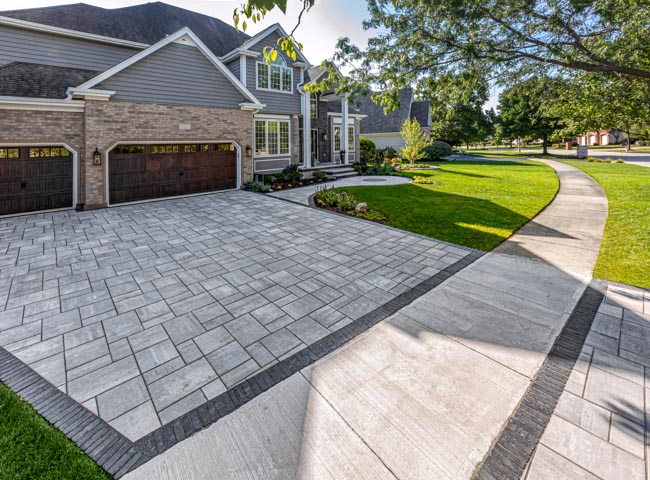
Exposed aggregate is more structurally robust than stamped concrete because the decorative stones run through the material. But without sealing, the salt and moisture that penetrate beneath the stones weaken the bond holding them in place. The stones begin to loosen and pop out over time. Regular concrete washing and sealing protects exposed aggregate by blocking moisture and salt before they can reach the bonds beneath the stones.
Broom Finish Concrete
Standard broom finish concrete is the most common driveway surface in Hamilton. Without sealing, it gradually loses its lighter colour and takes on a greyed, worn appearance. A penetrating hydrophobic sealer repels moisture and salt without changing the appearance of the surface at all.
How Often Should You Seal?
Most concrete driveways in Hamilton benefit from resealing every 2 to 3 years. The right interval depends on traffic volume, sun exposure, proximity to the road, and how consistently the surface has been maintained.
A driveway sealed regularly on schedule is easier and less expensive to maintain than one that has been neglected and needs more intensive restoration before sealing can happen.
Why DIY Concrete Sealing Often Goes Wrong
Sealing on a Hot or Sunny Day
When sealer is applied in direct sun or high heat, it cures too quickly. The result is flashing — the sealer bubbles and peels rather than bonding properly to the surface.
Too Much or Too Little Sealer
Too little sealer does not provide adequate protection. Too much sealer causes hazing, clouding, and bubbling. Both problems require correction, and correction costs more than getting the application right in the first place.
Wrong Product for the Surface
Standard grey concrete gets a penetrating hydrophobic sealer. Decorative surfaces get a film-forming sealer. New concrete gets a cure and seal product. Using the wrong product either underperforms or affects the appearance in ways the homeowner did not intend.
Inadequate Cleaning Before Sealing
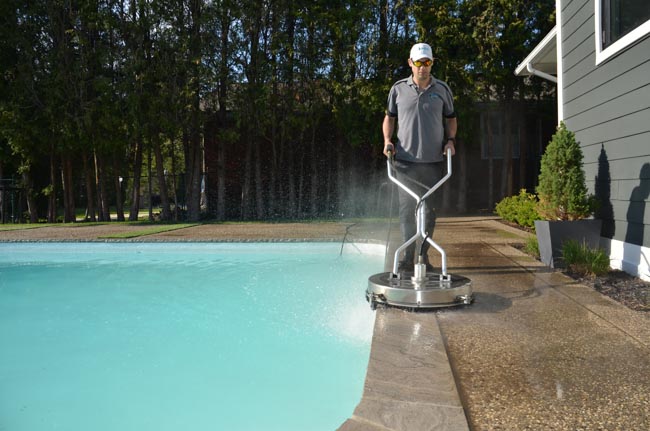
Sealing over a dirty or contaminated surface traps the problem underneath. Professional surface cleaning with the right equipment ensures the sealer bonds to a properly prepared surface.
No Non-Slip Additive
Sealed surfaces can become slippery when wet if no non-slip additive is included. We add Shark Grip to every sealer application as standard — invisible on the surface but providing meaningful traction underfoot.
Our Don’t Pay Until You’re Satisfied Guarantee
Every job we complete at A.D.S. Wash & Seal is backed by our Don’t Pay Until You’re Satisfied guarantee. We do not take deposits. We complete the work, and then we ask for payment.
After 15 years working on properties across Hamilton, Ancaster, Burlington, Waterdown, Dundas, Stoney Creek, Grimsby, and Beamsville, that guarantee reflects how we approach every job.
Get a Free Estimate
If your concrete driveway is fading, showing signs of wear, or has not been sealed in the last few years, professional cleaning and sealing can restore its appearance and protect it through the next several winters.
Call us at 905-515-2992 or visit our contact page to book your free estimate. Every job is backed by our Don’t Pay Until You’re Satisfied guarantee.
Frequently Asked Questions
Is concrete sealing worth it in Hamilton?
Yes. In Hamilton and across Southern Ontario, concrete is exposed to road salt, freeze-thaw cycles, UV rays, and moisture — all of which accelerate deterioration. Sealing is one of the most cost-effective ways to protect the surface and extend its lifespan.
How do I know if my concrete driveway needs sealing?
The simplest test is to pour water on the surface. If the concrete darkens and absorbs the water, the sealer has worn away. Other signs include fading colour, rough or pitted texture, stains that are harder to remove, and early surface flaking.
How often should a concrete driveway be sealed in Hamilton?
Most concrete driveways benefit from sealing every 2 to 3 years. Staying on a consistent schedule is more cost-effective than waiting until the surface shows visible deterioration.
Can exposed aggregate and stamped concrete be sealed too?
Yes, and both especially benefit from regular sealing. Stamped concrete is particularly vulnerable because its colour and pattern sit in a surface layer that erodes without protection. Exposed aggregate needs sealing to protect the bonds that hold the decorative stones in place.
Does sealing concrete prevent cracks?
Sealing reduces moisture penetration, which slows the freeze-thaw damage that contributes to cracking. It does not guarantee cracks will never form, but it is one of the most effective preventative measures available.
What time of year is best for concrete sealing in Hamilton?
Late spring through early fall, when temperatures are consistently above 10°C and the surface is fully dry. Timing and conditions matter significantly — sealing in direct heat or on a wet surface can cause the product to flash, bubble, or peel.
What is your Don’t Pay Until You’re Satisfied guarantee?
We do not take deposits. We complete the full job and then ask for payment — you inspect the work before any money changes hands.
What happens if sealer is applied incorrectly?
Common problems include bubbling and peeling from sealing in direct sun, hazing from applying too much product, insufficient protection from too little product, and bonding failures from sealing over an improperly cleaned surface.